


.png)
"The climate collapse has begun". Here is the reaction on September 6, 2023 from Antonio Guterres, the Secretary-General of the United Nations, after the announcement on the same day of the world record for heat this summer. Summer 2023 (June, July, August) was, in fact, the hottest ever recorded on Earth, with an average of 16.77 degrees. According to scientists from the European Observatory Copernicus, these 3 months have even been the hottest since approximately 120,000 years, that is the beginning of the history of humanity.
Temperature records and extreme weather events that are multiplying and intensifying. Heatwaves, floods, droughts, the summer was marked by these extreme phenomena such as torrential rains in Greece and Turkey, fires in the Hawaiian archipelago (at least 115 deaths) and in Canada where 16 million hectares of forests have been ravaged, equivalent to the area of Tunisia.
Extreme weather phenomena whose costs are obviously human but also economic. In a study published in August 2023, the insurer Allianz estimates that heatwaves have cost 0.6% of the world's GDP between May 1 and August 4 alone. China even saw 1.6% of its GDP evaporate due to heatwaves, 1% for Greece and Spain. And yet. These figures only take into account the impact of heatwaves on the productivity of employees and over a period of 3 months only.
As a result, French companies and others are and will be increasingly exposed to climate risks. All the studies carried out in recent years on this subject confirm it: business leaders are making these climate risks a major issue in the short and medium term in the strategy of their company.
What are the main climate risks?
For a company, there are three main types of climate risks that we will then detail:
- Physical risks: these are the risks related to the direct impacts of climate change
- Transition risks: these are the risks for the company related to the transition to a low-carbon economy
- Liability risks: lawsuits against companies and associated financial losses
1. Physical risks
These are the best-known risks because they are the most visible, those that affect us all as citizens: climate extremes like those that have occurred in recent years for example.
These extreme weather phenomena, we are already observing them all over the globe, including in France. Their frequency and intensity will increase with each additional tenth of a degree of warming. Here is an overview by Météo France of some of these impacts according to the different scenarios of climate warming.
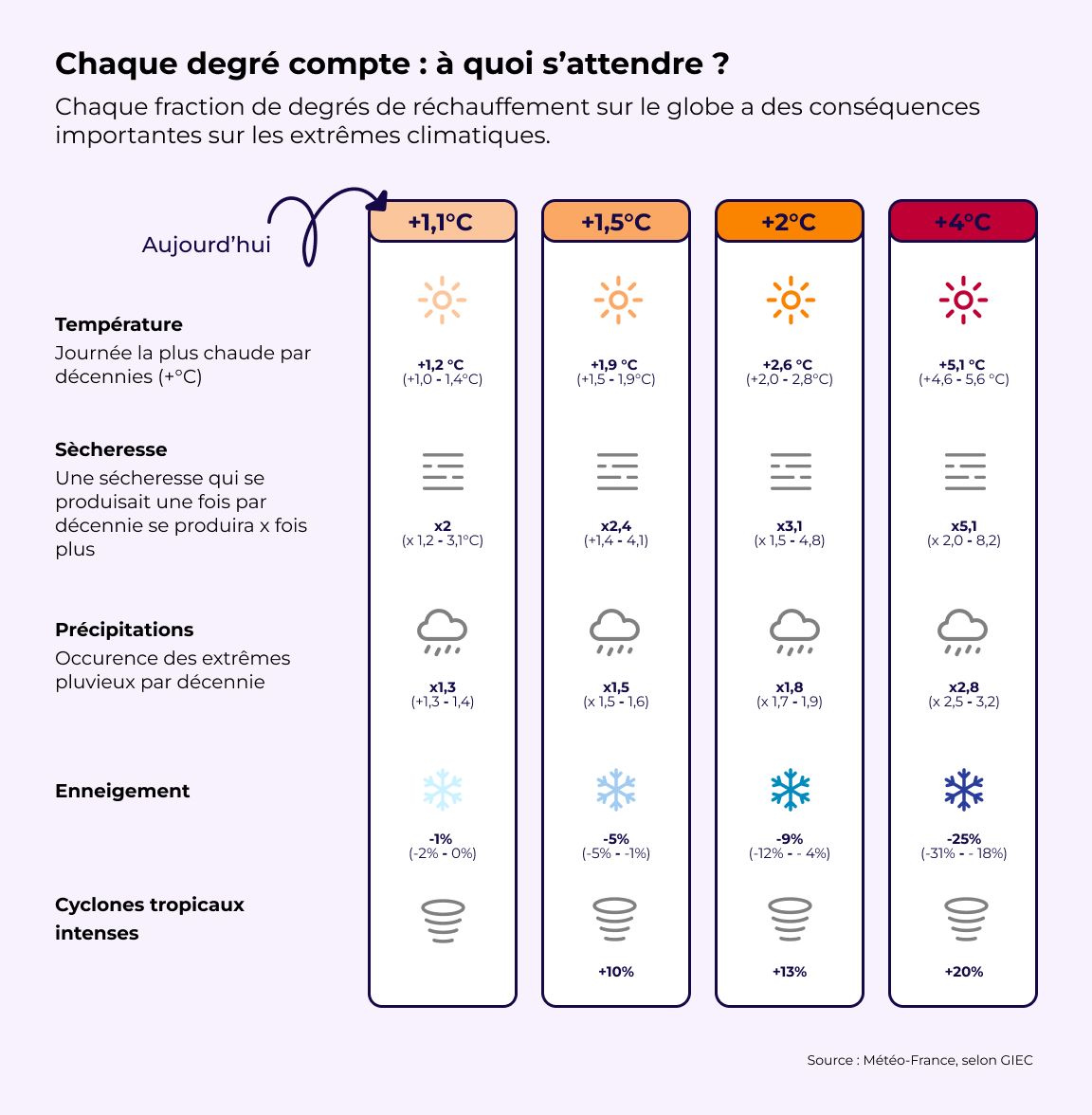
Here, we will focus on 3 types of impacts of climate warming and their consequences on business activity.
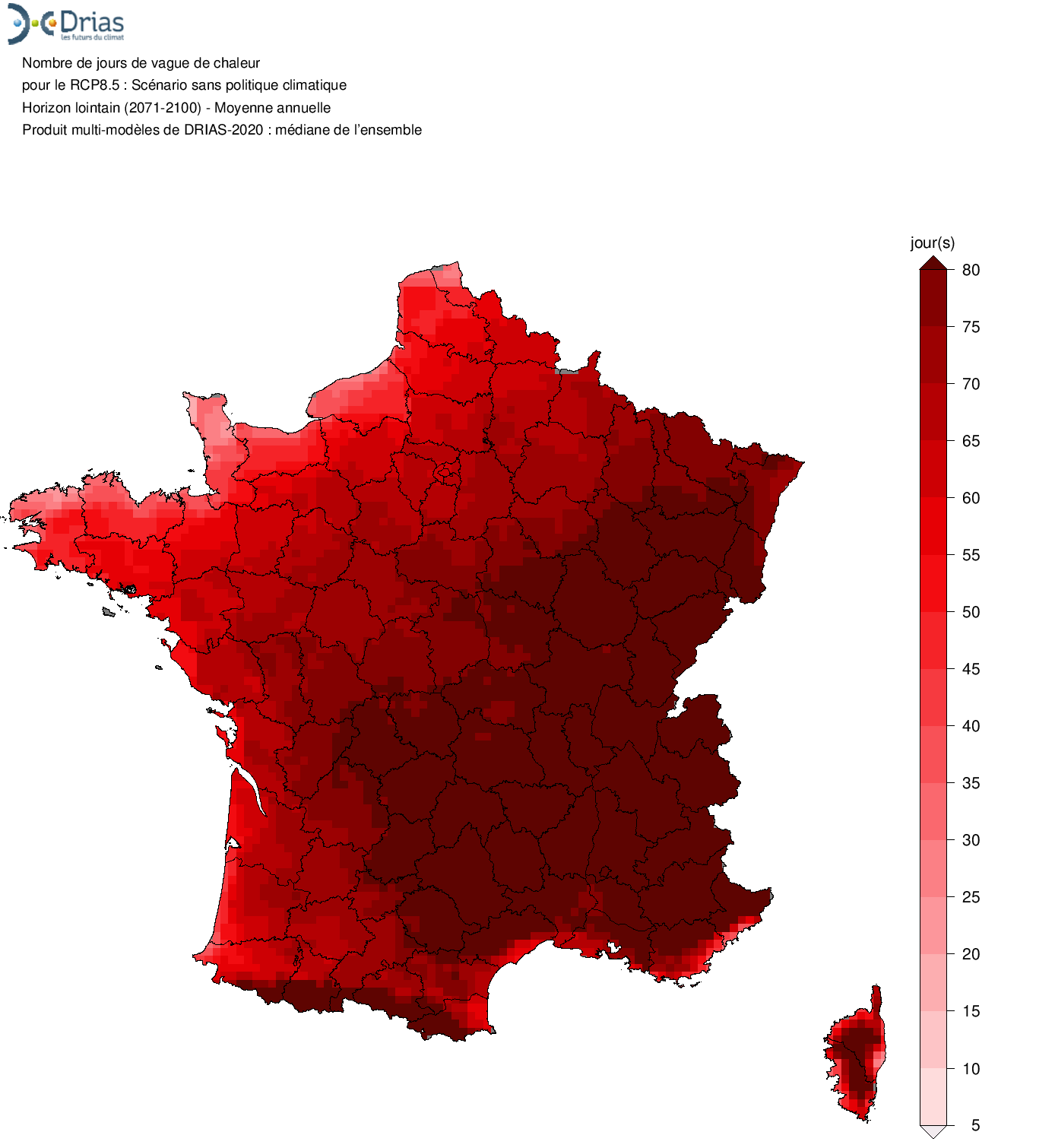
a. Rising temperatures and heatwaves
The average global temperature has already increased by 1.2 degrees since the pre-industrial era. 1.2 degrees globally according to the IPCC but already 1.7 degrees in France.

With 14.5 degrees, 2022 was thus the hottest year recorded on the metropolitan territory since the beginning of records in 1900. That's 2.7°C more than the 1961-1990 average. We are talking here about an increase in the average temperature. This is also reflected by very marked climate extremes, starting with the summer of 2023, the 4th hottest summer ever recorded in France according to Météo France.
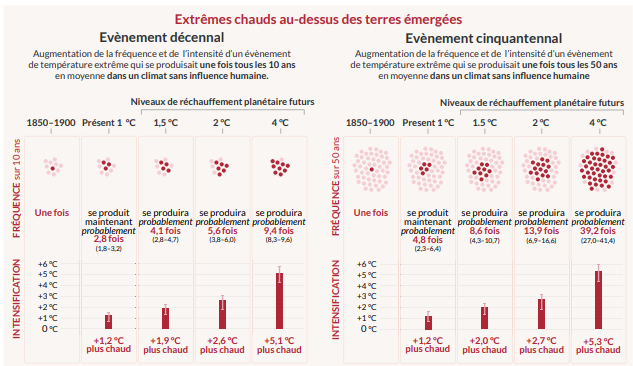
Nothing surprising in reality. Climate models are very clear about the increase in the frequency and intensity of extreme heat waves. Thus, according to IPCC scientists, an extreme temperature event that occurred once every 10 years in a climate without human influence will probably occur 5.6 times with 2°C of warming and 9.4 times, that is almost every year, with 4 degrees of climate warming.
What consequences for business activity?
The first is the impact of heat on the health of workers and on productivity.
Workplace health that is deteriorating
In a study published in June 2023, France Stratégies lists the consequences of thermal stress on health and working conditions: reduced vigilance and concentration, increased reaction times, mood changes… The National Institute for Research and Safety estimates that the occupational hazards associated with heat appear at 28°C for work requiring physical activity and at 30°C for sedentary activity. High temperatures can be associated with even more serious consequences: dehydration, heat stroke…
In Italy, during the heatwave of last July, 5 workers or laborers would have died from the effects of extreme temperatures. For 4 of them, they already suffered from heart problems. Italian unions have threatened to go on strike and demanded that leave be granted, the temperatures being too high to work. In September, at least 4 grape harvesters died in Champagne while working in extreme heat.
Decrease in worker productivity
Impacts on health but also on productivity. In this study published in 2022, several researchers estimated that exposure to heat is associated with more than 650 billion hours of work lost worldwide, equivalent to 148 million full-time jobs. The culprit is therefore the productivity of workers facing heat: it would drop by 50% on average at 33-34°C according to the International Labour Organization (ILO).
In France, economic losses related to heat could reach 1.5% of GDP by the middle of this century. According to the France Stratégies study, between 14 and 36% of workers would be exposed to heat. For many, they work in construction, agricultural and industrial jobs.
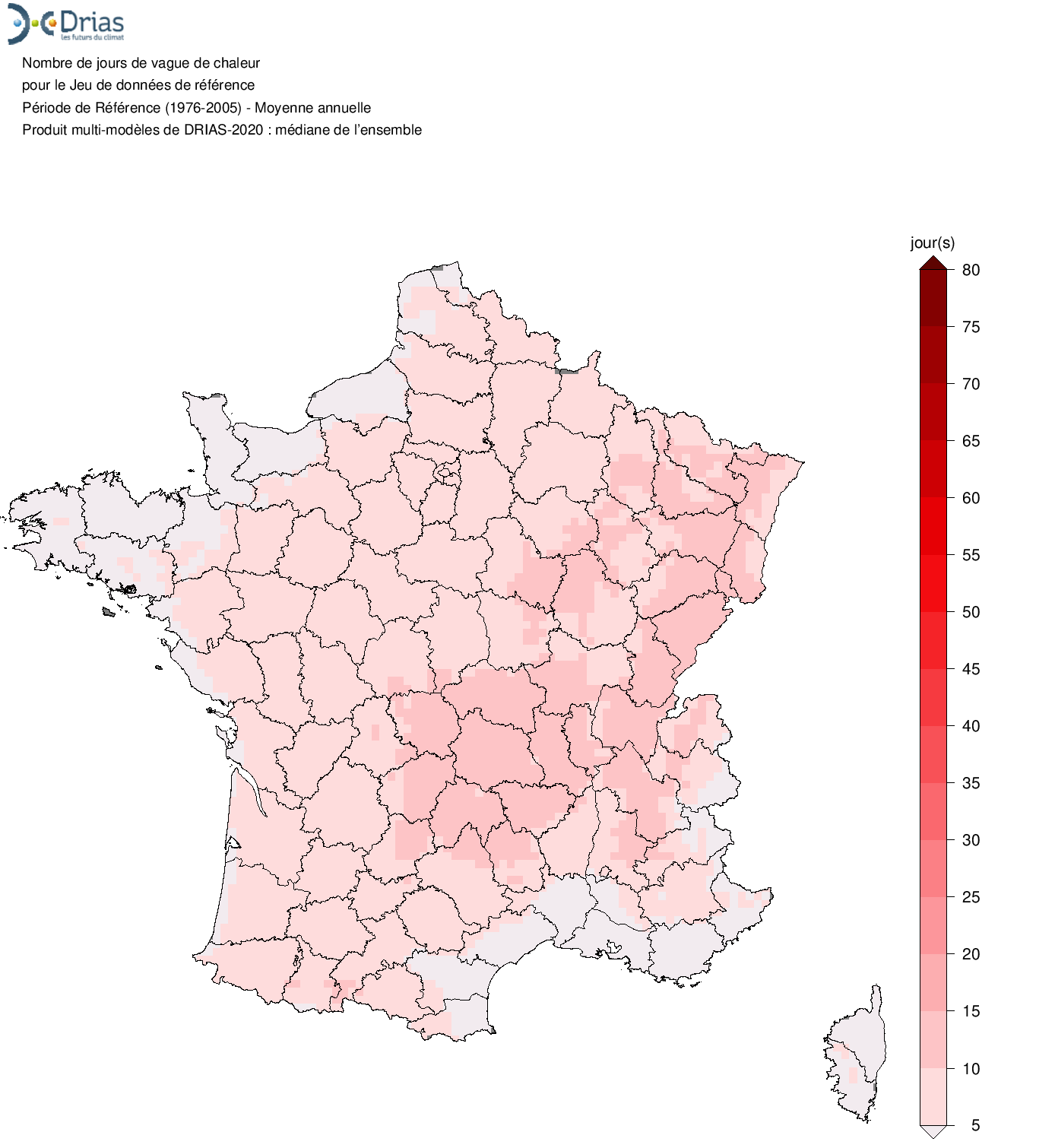
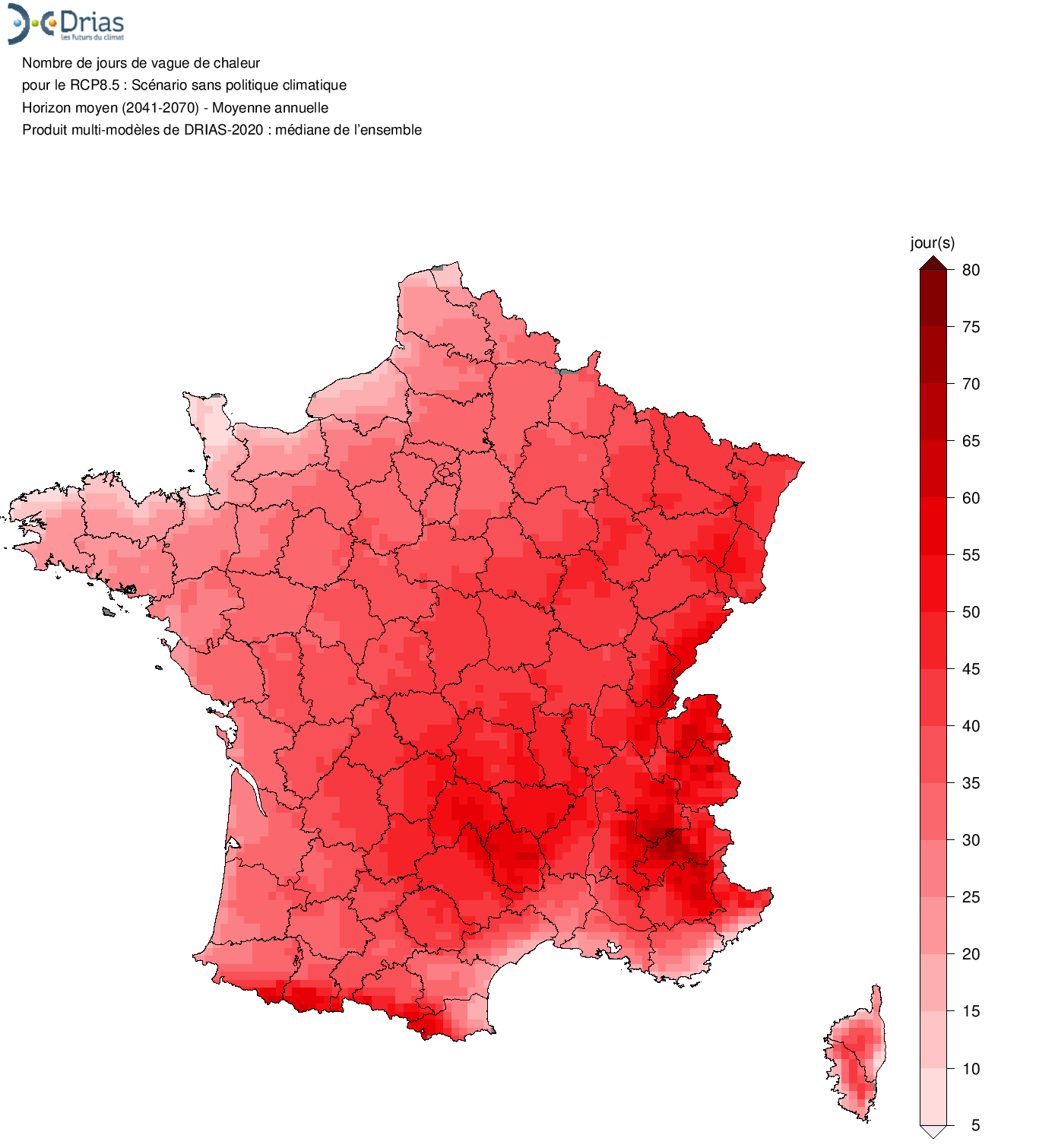
Companies are therefore not spared by these episodes of extreme heat: in a study published in 2022, the Goodwill Management firm (a partner of Sami in supporting companies in their climate strategy) cross-referenced maps of forecasts for the number of abnormally hot days with the geographical distribution of French SMEs. Result, in 2050, a little more than 5 million SMEs should be exposed to more than 50 abnormally hot days per year, which is 6 times more companies concerned than in the period 1976-2005.
A disruption of agricultural production
Another major impact of heat on economic activity: the disruption of growing cycles. Milder winters cause early budding of buds which can then be affected by a spring frost episode. This is what happened in France from April 4 to 8, 2021, causing considerable damage in orchards, vineyards or cereal crops with sometimes 80 or 90% of the production destroyed on some farms. The FNSEA estimated the damage at 2 billion euros. According to the High Council for the Climate in its 2022 report, the extension of the growing season due to climate change has increased by 50% the probability of a frost episode affecting the buds.
In another study, AXA Climate assessed the impacts of climate change on 16 fruit crops in 25 departments in France. Result, in 2030, 45% of the studied areas will be considered at extreme or high risk due to heat waves and frost, compared to 22% today.
b. Droughts
Once again, climate models are very clear: droughts are today much more numerous than they were during the 20th century and they will multiply in the coming decades.
Thus, according to Météo France and the IPCC, a drought that occurred once every 10 years will occur 3 times more often with a 2-degree warming and once every 2 years with 4°C of warming. Soil drying (agricultural drought) will intensify with up to 25 more dry days per year in 2050. Meteorological drought periods (rainfall deficit) will also lengthen, particularly around the Mediterranean and in the west of the country with 5 to 10 additional days by the end of the century.

What consequences for business activity?
Agriculture, the most affected sector
The first impact concerns the agricultural sector. In 2003, the exceptional heatwave that hit France and more broadly Europe was accompanied by an equally exceptional drought. As a result, according to this study, at the European level, plant production fell by 30% in 2003 compared to 2002.
Last year, in 2022, the hottest year ever recorded in France and marked by a 30% precipitation deficit, cereal harvests fell sharply: -10.5%. Corn production, for example, was the lowest since 1990.
Other affected sectors
But the impact of droughts does not stop at the agricultural sector. Hydrological droughts correspond to low levels of groundwater or reservoirs and a deficit in the flow of rivers. In this latter case, the associated economic activities suffer: nuclear power plants that use water to cool the reactors, river tourism, river freight or even hydroelectric production.
In 2018, the chemical giant BASF had to stop the activity of one of its plants in Germany which no longer received enough raw materials, the river traffic on the Rhine being slowed down because of the very low flow on the river. Last year, traffic was again strongly slowed down because of the summer drought. The locks of Gambsheim, near Strasbourg, saw traffic drop by 14% over the year compared to 2021.
c. Floods
… Linked to an event of extreme rains
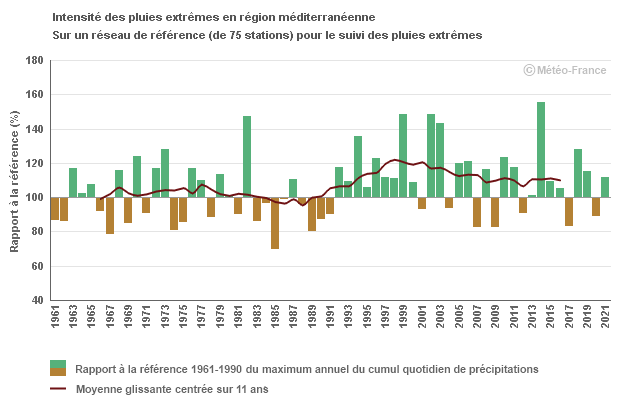
In this first case, once again, torrential rains will become more frequent and more intense under the effect of climate change, thus increasing the frequency of sudden floods and therefore the risk of flooding. Thus, at +4°C, the occurrence of extreme rainfall per decade will be multiplied by nearly 3 and by nearly 2 with 2 degrees of warming. According to the French climatologist Robert Vautard, specialist of extreme climatic events and co-president of the IPCC Working Group 1, extreme rains will increase everywhere on the territory. The indicator of torrential rains in the Southeast indeed testifies to an increase in their intensity since 1961. Below, the graph represents the daily cumulative precipitation expressed as a percentage relative to the 1961-1990 average. The higher values are represented in green, the lower ones in ochre.
… Linked to marine submersion (rise in sea level, retreat of the coastline, etc.)
In this second case, according to the 2022 annual report of the High Council for the Climate, "the risks of flooding by marine submersion are clearly increased due to the rise in sea levels caused by climate change". In France, the sea level is expected to rise by about twenty centimeters by 2050 and between 40 and 70 cm by the end of the century. A rise in sea levels that will increasingly be coupled with the increase in extreme weather events that are more frequent and intense such as storms. As a result, marine submersions will also multiply. As early as 2030, French coastal cities could experience between 20 and 30 marine submersion phenomena per year according to some experts.
What consequences for the activity of companies?
The Ministry of Ecological Transition estimates that nearly 1.5 million inhabitants and more than 850,000 jobs are exposed to marine submersions. Many economic activities of the coast are threatened: tourism (campsites, hotels, restaurants, etc.), port activities (leisure or commercial) but also petrochemical industries with the risk of accidents that goes with it.
The human costs of these disasters are obviously very heavy: 53 people died in France during the passage of storm Xynthia in 2010, including 29 in the single commune of La Faute-sur-Mer in Vendée hit by a marine submersion in the middle of the night. The financial cost was estimated at around 2.5 billion euros. The IPCC now estimates that coastal damage linked to sea level rise will be multiplied by 10 in Europe.
The number of jobs exposed is even higher concerning the risk of flooding linked to river overflows: 9 million. The cost of floods could increase by 81% over the period 2020-2050, reaching the amount of 50 billion euros, according to the French Federation of Insurers.
2. Transition risks
Transition risks are the impacts (positive and negative) related to the implementation of a low-carbon economy.
Because our economies are set to decarbonize, companies with carbon assets, which depend on carbon value chains, such as in fossil fuels, will have to decarbonize by force. And this represents risks.
Guillaume Colin, Head of Climate expertise at Sami
We can distinguish 4 main types of transition risks.
a. Regulatory risks
French and European laws are becoming increasingly stringent on the subject of carbon and more broadly on environmental impact.
Thus, we can cite:
- the programmed increase in the price of carbon. Several explanations. First, the Carbon Border Adjustment Mechanism (CBAM) came into force on October 1, 2023. After a learning phase, suppliers outside the European Union in highly polluting sectors (cement, aluminum, fertilizers, etc.) will be taxed based on the carbon intensity of their exports to the European market. They will also have to buy emission quotas on the European market. At the same time, new sectors will be integrated into this European carbon market, the free pollution rights distributed so far to European manufacturers will be gradually removed, and emission quotas will be reduced, with a 63% decrease scheduled for 2030. The price of a tonne of carbon could reach 250 euros in 2030.
- the strengthening of reporting obligations. The new European directive on extra-financial reporting, the CSRD, will come into force on January 1, 2024. It imposes more complete and transparent reporting on the environmental and social impacts of companies. On climate change in particular, companies will have to carry out a complete carbon footprint (scopes 1, 2 and 3) as well as present their emission reduction and adaptation plan. All companies with more than 250 employees should be affected, i.e. nearly 50,000 companies in Europe.
- In France, a greenhouse gas emissions report (BEGES) is mandatory every 4 years for companies with more than 500 employees.
- Regulation on products and services sold by companies. The 2021 Climate and Resilience Act, for example, provides for environmental labeling on certain products. An experimental phase will begin in early 2024 and will concern textiles and food.
- Regulation in certain economic sectors that is tightening. Again, we can cite the ban on the sale of new thermal cars from 2035 or the tertiary decree in the building sector.
- Moreover, an increasing number of companies are asking their suppliers to produce at least the carbon footprint of their activity. The carbon footprint is becoming a criterion in an increasing number of tenders, public or private.
b. Market risks
They refer to the financial risks associated with the company's exposure and the consequences of the transition on the different players present in the business market.
We have just seen that the price of carbon will inexorably increase in the coming years and decades, which will increase the cost of raw materials and the most carbon-intensive activities.
“With rising carbon prices, companies' exposure to carbon financial risk increases. And if its value chain is carbon-intensive, it risks paying much more for its raw materials or being less competitive downstream because these carbon taxes will erode margins.”
Guillaume Colin
Another risk is that related to stakeholders. Consumers are indeed increasingly attentive to their consumption habits and the environmental footprint of the products they buy. In this study on responsible consumption published in 2021 by the ObSoCo, the Observatoire Société et Consommation, 61% of French people considered the environmental situation to be very worrying, to the point of calling for radical changes in order to produce and consume less but better.
c. Technological risks
With the accelerating low-carbon transition, many innovations are emerging and gradually replacing more emitting products or services. This obviously poses a risk for a company of falling behind and losing market share. This technological risk is also a financial risk, of investment in research and development of less emitting technologies. Costly and sometimes fruitless investments.
d. Employer brand risks
According to this study published by Unedic in April last year, 84% of French workers want a job in line with the climate challenge and ¼ of workers are considering changing jobs or companies to bring their professional life in line with their ecological concerns. More and more graduates from top schools are thus refusing to work for companies whose actions are deemed harmful to the climate. We have seen this recently at HEC and AgroparisTech.
3. Liability risks
This corresponds to the financial impacts linked to possible legal proceedings against a company accused of having participated in climate change or of not having implemented a realistic strategy to reduce emissions.
Legal actions against companies are multiplying. According to the Grantham Institute for Climate Change and the Environment, 26 legal actions against companies were recorded in 2022, 27 in 2021, compared to only 9 in 2020 and 6 in 2019. Three NGOs, for example, sued BNP Paribas in February 2023, denouncing the support of the French banking group for fossil energies. In September 2023, 4 associations filed a criminal complaint against the oil group TotalEnergies for “failure to fight a disaster” and “involuntary homicide”.
Legal actions that represent a real financial risk for the companies targeted. This is what the Grantham Institute of the London School of Economics proved in a study published in 2023. The filing of a complaint results in an average reduction of 0.57% in the value of the targeted company. And an unfavorable judgment an average decrease of 1.5% in the stock price.
How to act for companies?
1. Identify the climate risks that weigh on your company
As we have just seen: the impacts of climate change can have very diverse consequences and at all levels of the company's value chain.
Another element: climate risks in France are obviously not the only ones to be taken into account. A climate event at the other end of the world can also have an impact on the value chain of any French company. Two examples:
- The floods in Thailand in 2011 shut down many factories of international automobile manufacturers, the production of hard disks or electronic chips was interrupted.
- In 2021, Taiwan experienced its worst drought in 56 years, leading the government to restrict water access for many industrialists including TSMC, the world's largest semiconductor manufacturer. It had to reduce its water consumption by 10%.
Conducting an analysis of the impacts of climate change allows you to precisely identify the risks to which the company may be exposed, what are the major risks that weigh on them, at what levels of the value chain in order to then draw up a plan with action tracks to reduce these risks, adapt the activity or the company's model but also identify and seize the opportunities arising from this analysis.
Several methods have been developed to identify the impacts of climate change on business activities. ADEME, in this report, lists three main methods:
- Risk assessment
- Vulnerability assessment
- Threshold analysis
We will detail here the vulnerability assessment method, created by the IPCC to identify the risks of climate change on economic sectors.
To determine the risk, it is based on the calculation of a:
- Exposure: to what climate hazard is the company exposed in view of the location of my value chain?
- Vulnerability: to what extent is my activity sensitive to the hazards to which the company is exposed?
Here is an example of a risk analysis by vulnerability assessment:

And an example of the impacts of climate change on the value chain of a company, here Kering:

Many tools and methods, including sector-specific ones, are available to companies to help them conduct this climate risk analysis. ADEME lists some of them in the previously mentioned report. The teams of the Sami Consulting branch can also provide such an analysis.
Regarding transition risks, i.e., financial risks related to the transition to a low-carbon economy, the best risk analysis is the carbon footprint.
"Exposure to this risk is how carbon-intensive the company is, how carbon-intensive the product or service sold is in a carbon market. The risk is linked to carbon dependence. The more dependent the company is, the more it will be exposed to regulation, for example, carbon taxes. And to calculate this dependence, the carbon footprint is a precious tool. This is a way to measure these risks and limit them."
Guillaume Colin
{{newsletter-blog-3}}
Once the vulnerability diagnosis is made, the company can move on to the next step.
2. Implementing a mitigation and adaptation plan
Two priorities for the company facing climate change:
- mitigation: limiting greenhouse gas emissions
- adaptation: adapting to the impacts of climate change in order to reduce risks and costs
For a company, committing to a strategy of reducing greenhouse gas emissions is essential. By limiting its emissions, it reduces its carbon dependence and thus limits the risks of transition to a low-carbon economy, as well as liability risks. And then, reducing emissions is also doing one's part in the global fight against global warming. The best method to limit the impacts of climate disruption is indeed to reduce emissions as quickly as possible. Every ton of CO2 avoided counts.
But that won't be enough. Whatever the scenarios for greenhouse gas emissions in the coming years, the inertia of climate change means that its impacts will increase at least in the coming years and decades. This makes adaptation a major issue in corporate strategies.
Once the diagnosis is made, the challenge for companies is to build an action plan based on the main risks identified. The range of measures to be taken is very wide and obviously depends on each company, its size, its sector, its location and therefore the risks that will have been identified. But here are some possible actions:
- identification of new suppliers to compensate for a supply shortage
- new raw materials in case of major risks on the production of some of these materials (agricultural ones in particular)
- identification of alternative logistics routes
- adaptation of buildings to physical climate risks: adjustments in the face of floods, insulation in the face of heat waves
- relocation of certain buildings depending on their geographical location and the associated risks (marine submersion for those located on the coast for example)
- adapting one's activity in times of crisis: staggered hours, teleworking...
- modifying the core activity of the company
Several methods exist to determine an adaptation plan and implement it: scenario planning, robust decision-making or trajectory planning. You will find the details of these different methodologies with concrete cases of pioneering companies in their adaptation planning in this ADEME report: Companies, how to make decisions to adapt to climate change?
ADEME has also published two other reports on the climate risks affecting companies, their identification and adaptation:
- Diagnosis of the impacts of climate change on a company
- Capacity of companies to adapt to climate change
Other sources:
- ONERC, National Observatory on the effects of global warming
- Resource center for adaptation to climate change
- Institute for Climate Economics
- Work in the face of climate change, France Stratégie
- Climate change 2021: The physical science basis, IPCC
- Beyond observations, implementing solutions, High Council for Climate, 2022
- Climate risks for SMEs, Goodwill Management
- Drias, the futures of climate
- Météo France
- Grantham Institute
- Task force on Climate-related Financial Disclosures, TCFD
Decarbonization Mission
Don't miss the latest climate news and stay ahead of regulatory changes


Your carbon footprint with Sami
Sami accompanies you in measuring your emissions and implementing your climate strategy



.jpg)


Les commentaires